|
BUY 2 BUILD is a new kind of kitcar test, designed
to give you all the information you need before buying
and building a kitcar. Kit-car consultant editor Peter
Coxhead will examine not just the completed car, but
also the kit, the build, the company and the build literature.
AND he has spoken to two owners about their own builds.
Beetles were never renowned for their handling qualities.
Torsion bar front suspension has poor geometry compared
to, say, unequal length wishbones and the rear suspension
swing axles can cause jacking problems, which combined
with a weight of a rear mounted engine can give some
interesting moments if the car is driven on the limit.
However, there are two things to consider here.
First, many millions of people have driven the 20,000,000
+ Beetles produced to date, many, many millions of miles
without any trouble at all. They are appreciated for
their rugged reliability and user friendliness - not
their ability to powerslide around Brands Hatch. There
are significant numbers of people who want exactly these
qualities in their kitcar.
Second, removing the heavy steel body and replacing
it with a lightweight fibreglass job results in a lower
centre of gravity which changes the handling characteristics
of the car, making it more stable.
As for engine performance, the sky is the limit - 400bhp
from an air-cooled Beetle engine? It's possible but
not very suitable for the Speedster we suggest. However,
even though the 55bhp of the stock engine may well suit
a lot of people, it's possible to get a lot more for
not very much money.
If you're reconditioning the engine and having it rebored,
a set of oversized pistons and special barrels would
be a quick and economical route to more power. Two litre
engines are commonplace and although three litres cost
quite a bit more they are available. Dual port heads
are vastly superior to Saimesed ported ones and careful
work on smoothing and enlarging the ports can give gains
out of all proportion to the modest work and cost involved.
Twin carb. set-ups work very well but well designed
and strong linkages are required to span the large gap
between them. If a single carburettor set-up is retained
it's best to keep the standard type of inlet manifold
pipes coupled to the exhaust system to prevent carb.
icing problems during cold weather.
However, the basic Chesil setup works fine if you drive
sensibly, so don't spend time and money improving performance
which you may not need. If you do wish to uprate the
donor mechanical spec. talk to Chesil first - they've
done it all before.
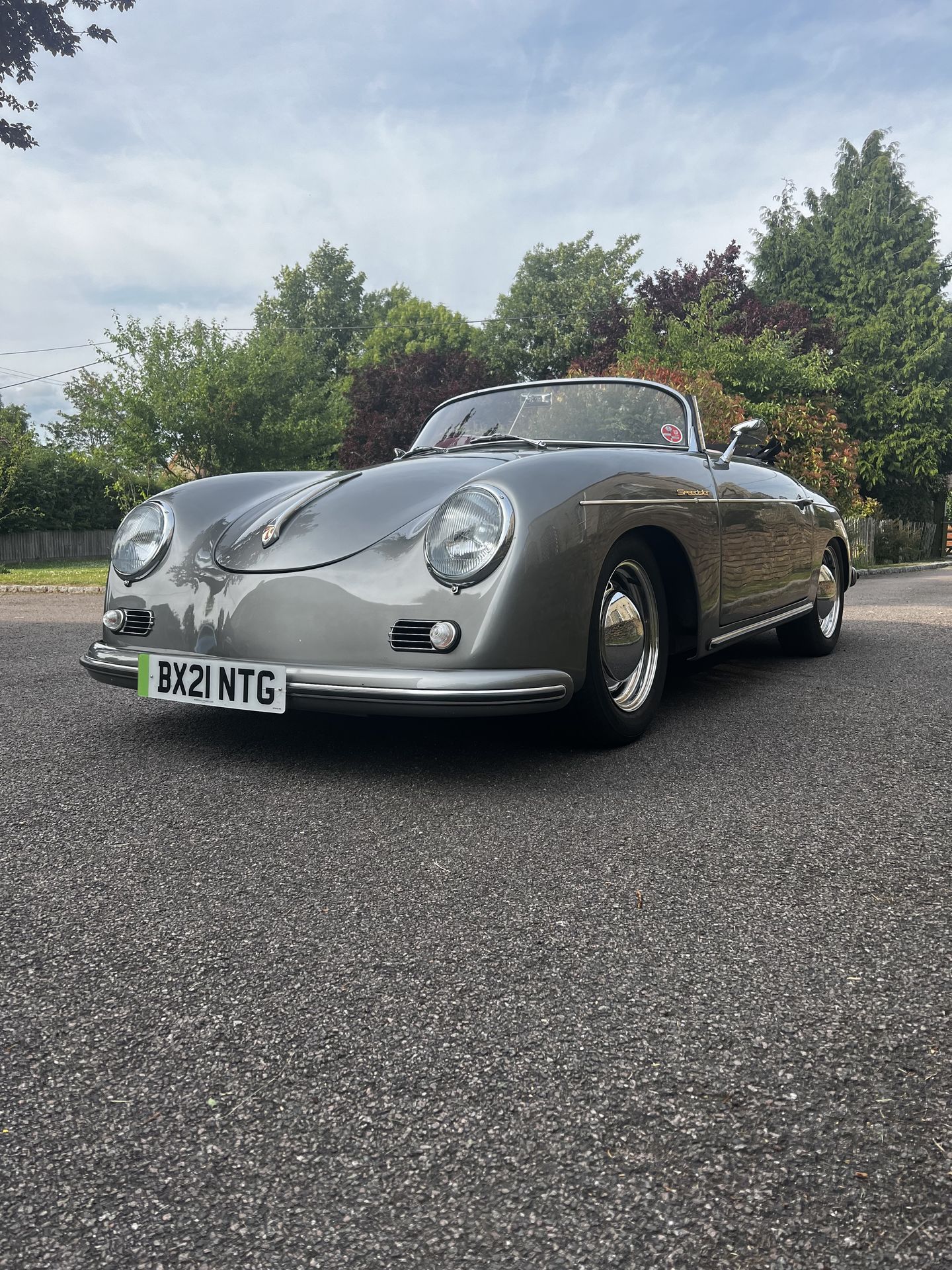
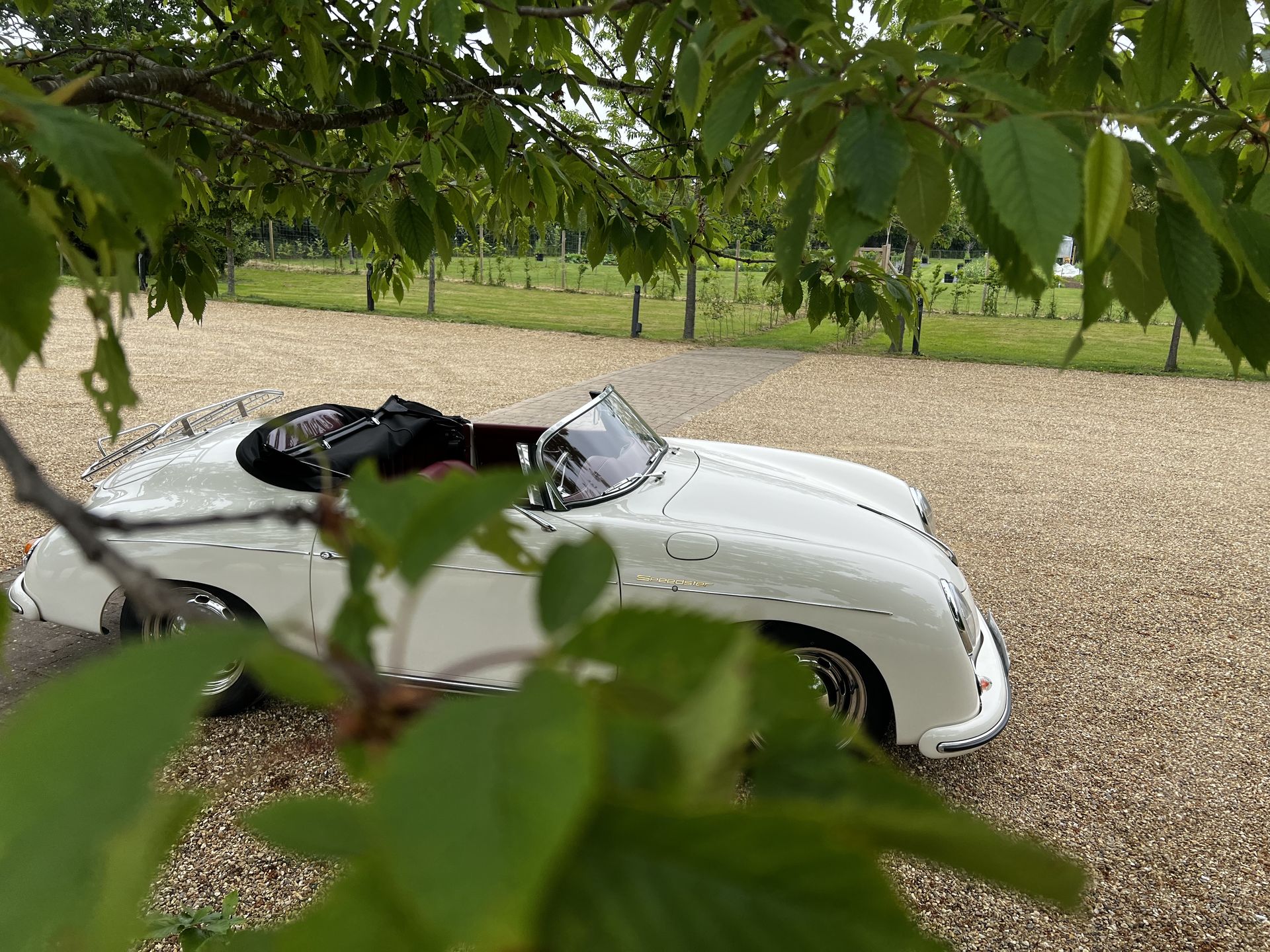
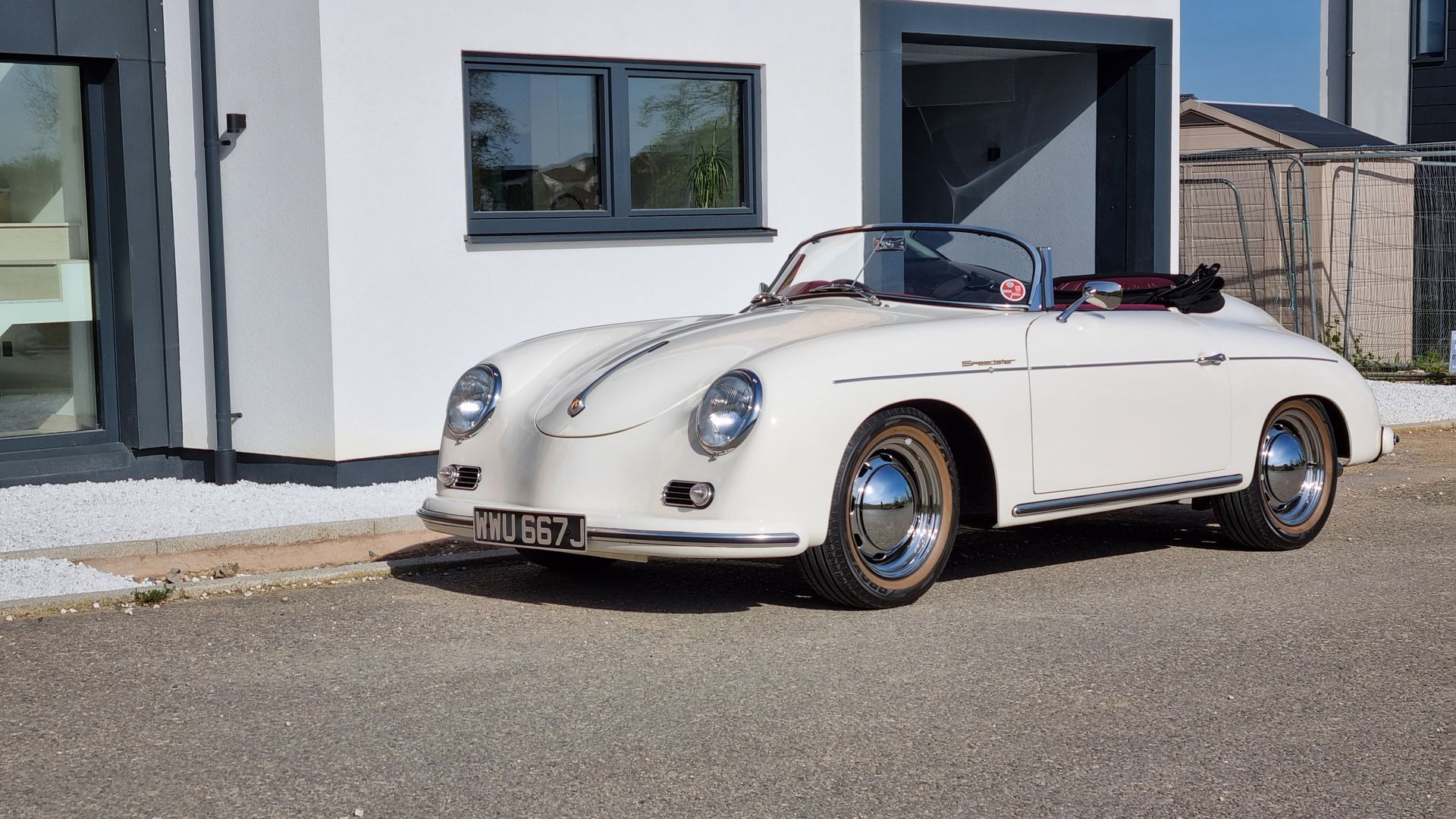
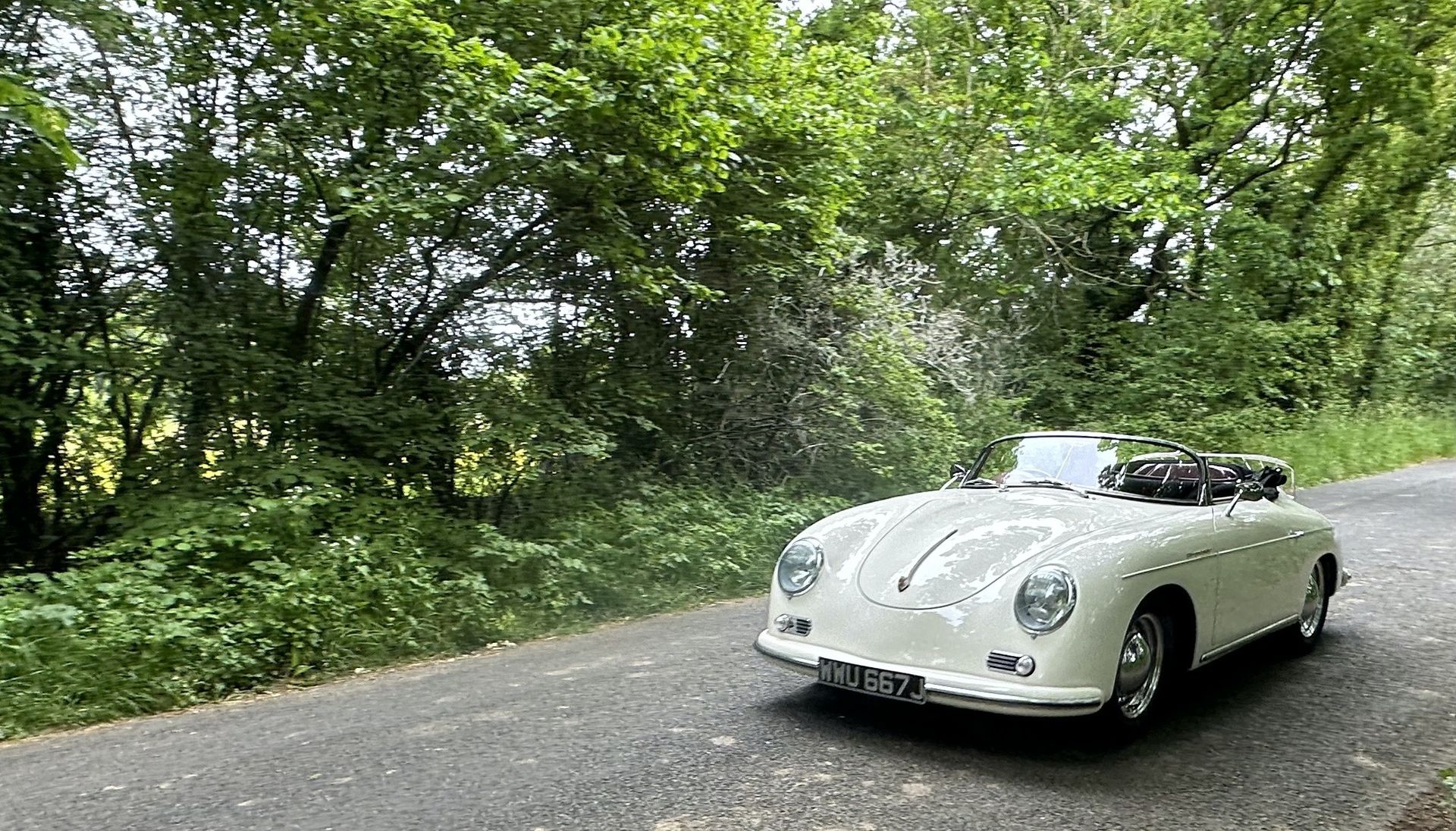
As a touring sportscar, the Chesil Speedster is relaxed
and undemanding to drive. It's lighter than the donor
Beetle so for a given engine size it accelerates more
quickly, to the extent that it does feel much more sporty;
its corners better and has a firmer ride. This is very
much apparent on cars fitted with the double-jointed
rear drive shafts (IRS in Chesil terms) where rear end
feels more solid and less inclined to hop around under
extreme cornering loads.
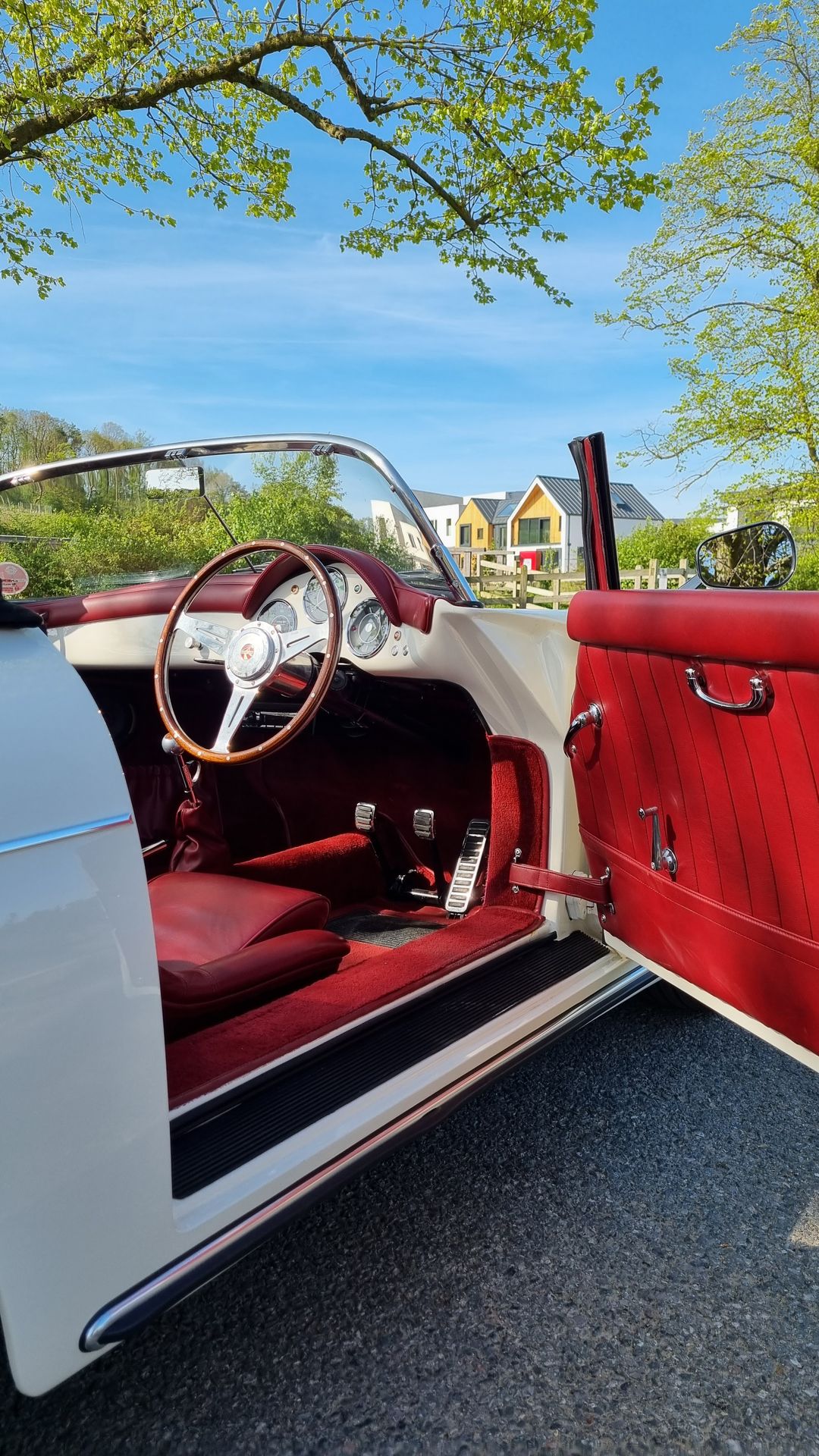
What is so nice about the Chesil Speedster is its level
of comfort and practicality. We've driven the car in
pouring rain and only the smallest amount of water crept
in around the top of the window, while the heater kept
the interior warm and condensation free. The wind-up
window option is one we would definitely go for and
the latest model option is the 'Convertible D' with
its taller windscreen that allows more headroom with
the hood raised.
Altogether we found the Chesil Speedster to be a thoroughly
pleasant car to drive. It was stiff and rattle free.
With the hood down and the windows raised there was
little draught in the cockpit and it was quiet enough
to carry out normal conversation without raised voices.
CONTINUAL DEVELOPMENT AND PROFESSIONAL MARKETING ARE
THE KEY
THE COMPANY:
PORSCHE Speedster replicas have been around for a number
of years. They enjoyed a certain popularity in the early
days of kitcars but this gradually fell away until,
by the mid-80's, most people in the trade thought that
this particular sector of the market was a dead duck.
Certainly the people at a company called Street Beetle
were of that opinion. Their Porsche replica was pretty
good - Beetle-based and easy, and not too expensive,
to build. However, it didn't sell in quantities that
made its manufacture a viable business. Neither did
other Speedster replica manufacturers attract sufficient
customers and so that market gradually died.
Then along came Peter Bailey. Peter, a long time Beetle
fan, bought the project lock-stock-and-barrel from Street
Beetle in 1990 and renamed the company Chesil Speedsters.
It seems he didn't accept that such a sweet-looking
car, with so much going for it, would fail to sell if
it was marketed properly.
Marketing, the Achilles heel of so many companies, is
one of the main planks of Chesil's strategy. Another
is the on-going development programme that is dedicated
to continually improving all aspects of the business
including the quality of its main product, the Speedster.
It all sounds simple enough but it takes an immense
amount of time and effort to identify, plan, organise
an control the many strands of an ailing business that
need attention. Like many small companies, Chesil Speedsters
didn't have the financial resource to call on the services
of outside help, but by working long hours and perfecting
the trick of keeping several balls in the fair at any
one time. Bailey gradually succeeded in turning the
business around.
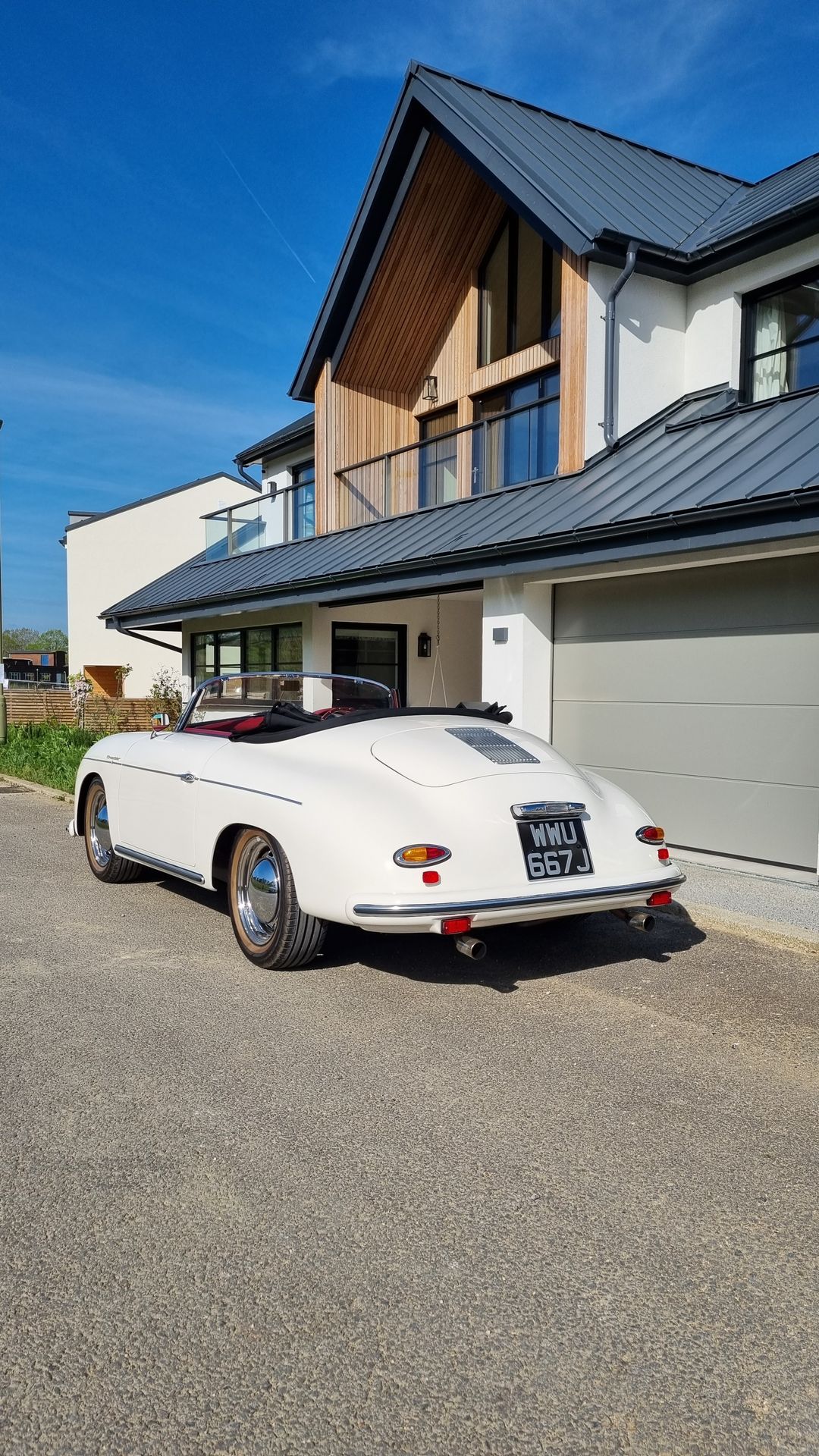
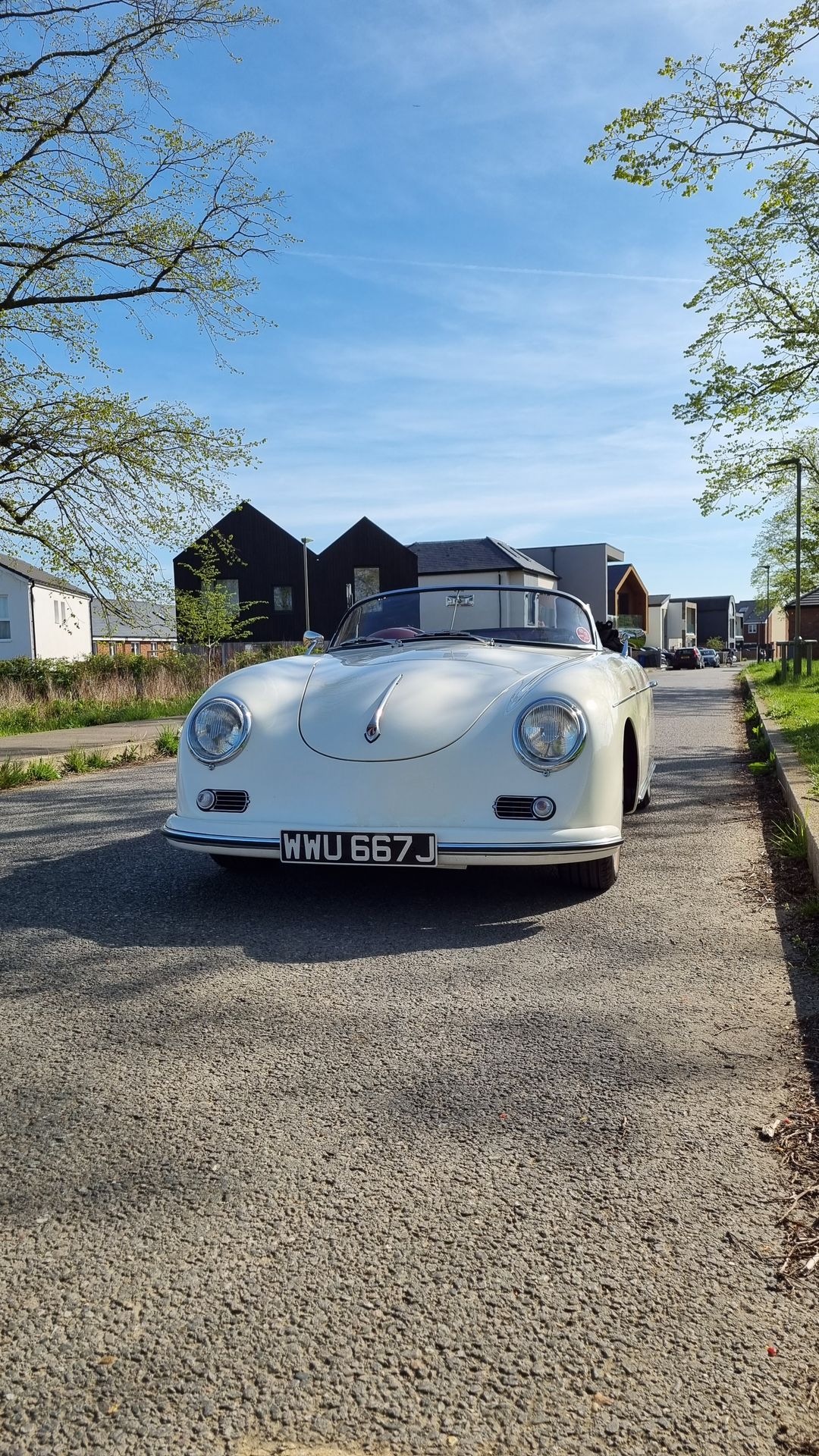
Beautifully built demonstration cars, attractively laid
out stands at shows, persuasive advertisements, tidy
premises, good literature, lots of publicity (some of
it outside the traditional kitcar press) and a very
good sales technique all contributed to a highly successful
marketing policy. Along the way he found time to set
up the Association of Specialist Car Manufacturers and
continues to persuasively argue that to survive, the
kitcar industry must widen its horizons and create new
markets.
Because of an increase in the number of customers wanting
fully built, turnkey cars, the company has recently
opened a brand-new workshop to meet the demand. Another
project that is reaching fruition is the production
of a 550 Spyder replica and kits should be available
sometime at the end of this year.
PERFECTLY PACKAGED: THE KIT OPTIONS
The Speedster body kit is available in right or left-hand
drive and Base Kit or De Luxe form. The GRP bodyshell
is hand-laminated and has 2/3 layers of gel coat to
achieve a good depth of colour. There is a choice of
80+gel coat colours that provide a very acceptable finish,
or the bodyshell can be spray painted. The undersides
of the panels are finished in a smooth flowcoat and
special matting is used in areas of particular stress.
As an option, all the necessary holes for the lights,
instruments, etc. can be ready cut, free of charge.
All body kits come with a substantial folded steel subframe
bonded to the bodyshell and this incorporates heater
channels, door hinge mounts, door latch mounts and seat
belt mounts. It is powder-coated as standard, but zinc
plating is an option at extra cost.
The base kit consists of: unpolished bodyshell/subframe;
bumpers and fittings; bonnet with hinges and brackets;
engine cover with hinges and brackets; doors (not fitted)
with hinges, shims and fixings; panels to fit between
VW engine and Chesil subframe, including rubber seals
and battery tray; and rubber weather seals. This costs
£3,265 plus VAT.
The De Luxe kit is £4.695 plus VAT and has much of the
body panels and hardware fitted - part of the build
that may customers find most difficult. The kit consists
of: bodyshell/chassis unit in gel coat finish to customer's
choice of colour; front and rear bumpers in body colour;
bonnet fitted and latched with interior cable release
and bonnet stay; engine cover with thumb latch and interior
cable release; doors hung and latched using replica
hinges, plus inner and outer door handles; windscreen
fitted with frame and all rubbers; powder-coated hood
frame with header rail and chrome latches all fitted;
Mohair hood with beige inner face in a choice of standard
or large rear window; toughened glass sidescreens with
hard wood door cappings, chrome support set, security
straps, weather seals (wind up windows an option). Engine
sealing panels as in base kit; battery tray and weather
seals.
Additional parts are supplied as packages, including
all fittings, down to the smallest screw. For example,
the Electric's Set includes body grommets, cable fixings,
terminals and crimper, plus major items like the wiring
look and switches. Lighting, body, trim, dash, heater,
upholstery (above), carpet and replacement engines are
all also available.
NO PROBLEMS FOR A DIY FAN: THE BUILD
The majority of people still prefer to build the Speedster
themselves from one of the available kits. The process
is a fairly simple one and, if you consider yourself
to be a DIY type of person, you should have no problem
in screwing a Speedster together.
In simple terms, it consists of buying a donor Beetle,
removing its bodyshell to expose the floorpan and mechanical
items, refurbishing any worn parts, shortening the chassis
by 10.5 inches, bolting on the new body/sub chassis
unit and trimming the interior. In practice, of course,
there is a little more to it than that.
Chesil's construction manual is well illustrated and
clearly written, but it only refers to items related
to the kit itself, so a VW Beetle workshop manual will
be required when working on donor car parts. In fact,
all of the company literature is well produced and information.
Lets look at the build in a little more detail.
Step one is to remove the donor car body shell. Simply
disconnect the steering column, remove the wiring loom,
remove the 32 or so bolts from around the periphery
of the floorpan and, with couple of strong men, lift
of the steel bodyshell.
Using the workshop manual as a guide, remove the engine,
transaxle, front and rear suspension, brake and fuel
lines, so the chassis is completely stripped ready for
shortening. At this stage you may decide to carry out
the chassis modifications yourself or you could get
Chesil to do it for you. The floorpans may need replacing
if they are corroded and the company will carry out
this work.
Okay, so you've decided to let Chesil take the strain
and carry out the chassis modifications. Meanwhile,
you can begin refurbishing the mechanical components.
This is an ideal opportunity to replace worn items and
clean and paint hardware - wheel bearings, oil seals,
track rod ends, shock absorbers and so on are all easy
and cheap to replace.
Also, you could now modify the springing to give a soft,
supple ride to your Speedster, which will be considerably
lighter then the original Beetle. The VeeDub uses horizontal
torsion bars that run in tubes across the front of the
car. To soften the ride and lower the ride height you
could remove two leaves from the top torsion bar and
fit a Sway-A-Way unit to the lower one. An easier, more
effective option would be to use a completely rebuilt
front-end (£100) with all the necessary modifications
built-in.
If you purchase the Full Body Kit the handles, release
mechanisms, windscreen and hood frames will all be
fitted for you but you will have to carry out these
task next if you are working with a Base kit. The
keys to success here are careful measurement, adherence
to the instructions and patience to achieve a good
fit.
Chesil offer a free hole cutting service and this is
one option that would be on our priority list providing
that a standard car is being built. If you decide to
fit different instruments or lights than those recommended,
the necessary holes can now be cut.
Now comes the interesting bit. With the rebuilt modified
chassis repainted and on its wheels, the bodyshell/subframe
can be fitted and suddenly a Speedster is born - and
it all happens very quickly. After applying sealing,
the bodyshell unit is placed over the floorpan and bolted
down using the original fixing holes. A couple of hours'
work completes this transformation - a day's work could
see the body fitted and engine installed.
It seems that one of the bug-bears of kit building is
the electric's. Chesil's loom is tailor-made for the
job, with terminals fitted and identified, but still
people seem to get hung up. The construction manual
gives pretty clear instructions, so it really is a case
of taking your time and working carefully.
You are now on the home run of the build. The steering
column location might be a big tricky to work out (make
a small hole in the suggeste3d position on the bulkhead
and use a thin rod to establish the correct line to
the steering box), but fitting out the underbonnet area
is simply a matter of closely following the directions
in the manual.
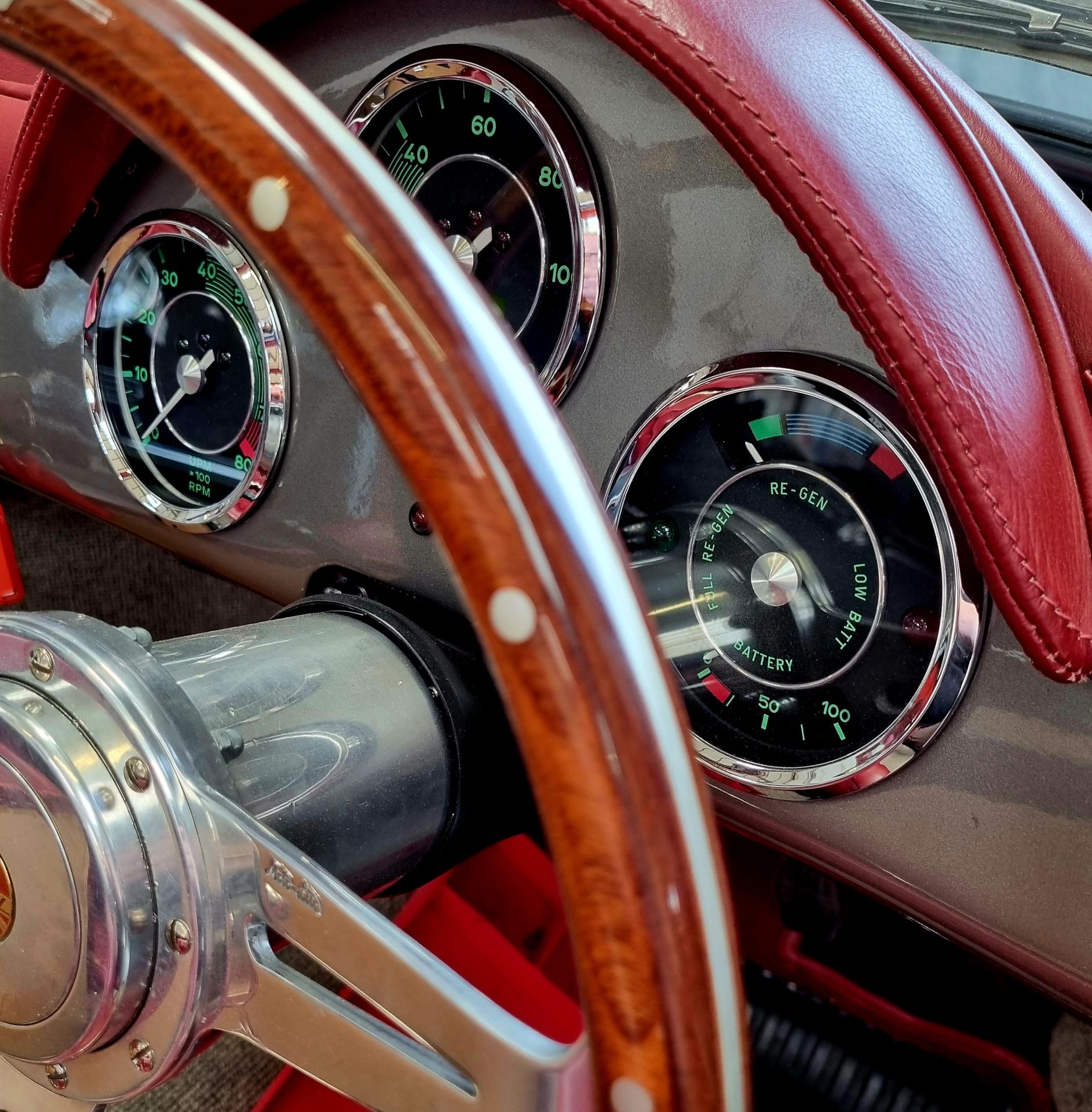
The trim panels are accurately cut to size and upholstered
- this is one of the most outstanding features of the
Chesil and a very professional finish is easy to achieve.
The carpet set is cut to size and edged and only needs
screws or glue to fix into place.
Sidescreens, door seals, seats and trim items are all
straightforward to fit but completing the wiring and
fitting instruments could cause the nervous amateur
electrician some worrying moments.
The Full Body Kit has the hood frame already fitted
but there appears to be no instructions how to do
this in the manual, so again you could leave this
job to Chesil. Heart-stopping moments abound during
this operation but once again care and attention to
detail will ensure a good fit.
That is just a brief outline of the build procedure
for the Chesil Speedster. You don't need to be a trained
craftsman to put a car together, but you do need to
think about what you are doing and pay attention to
the detail. Take your time, do a good job and you'll
have a car to be proud of.
THE MOTHER OF ALL DONORS: THE DONOR
The mother of all donors, the VW Beetle is perfectly
suited to provide the mechanical components for the
Chesil Speedster. Dr Ferdinand Porsche designed both
cars and many features were common between the earlier
Beetle and the Speedster. So while the Chesil's version
of the Speedster is not an exact copy of the original
the mechanical components beneath the accurate GRP bodyshell
do have a very good pedigree.
Not only does the VeeDub supply all the major mechanical
and electrical components but also it gives up its internal
organs without a struggle. The steel bodyshell simply
unbolts from the sturdy steel floor pan, leaving the
complete suspension, engine and drivetrain exposed for
easy refurbishing.
There has lately been a surge of interest in Beetle-based
cars. Why? Clearly, recent changes in legislation have
made it more attractive to own a kitcar, which uses
the majority of components from a single donor. This
way the car can be registered as a rebodied VW and retain
its registration number and avoid the SVA test. It may
even be exempt from road tax if the donor is old enough;
insurance premiums and other running costs are usually
low. As it happens, the Chesil Motor Company was one
of the first manufacturers to comply with the SVA test
so, if any changes occur in the law, or if the idea
of an original registration number does not appear,
it is perfectly possible to have the car tested and
licensed in the usual manner.
But there are more, practical reasons for choosing the
Beetle as a donor. There are millions of cars available.
Despite the ridiculously high prices now being paid
for cars in good condition, there are thousands of MOT
failures to be had that sell for a dime a dozen. Spare
parts are very cheap, so you can completely recondition
the running gear at negligible cost and the early '40s
technology is so simple you don't need to be a mechanical
wizard to carry out all the work yourself.
Any Type 1 VW Beetle can be used as a donor for the
Chesil Speedster. There are various models that come
under the Type 1 heading. The first of which is the
000cc, which has drum brakes, torsion bar front suspension
and swing axle rear suspension. Continuous improvements
saw the introduction of bigger engines, disc brakes
and the swing axle, which was prone to jacking, was
fitted with a Z-bar and the torsion bars were softened.
Double-jointed rear driveshafts with diagonal links
were introduced - again aimed at reducing jacking when
cornering hard.
An important modification was the replacement of swing
arm front suspension by tall McPherson front to accept
torsion bars and Chesil can carry out this modification
for you.
With the Beetle's steel bodyshell removed, the chassis
is not very torsionally stiff and The Chesil Motor Company
supply a steel frame to replace the loss of stiffness.
They also offer a chassis shortening service.
All Beetle engines are pretty reliable. They are noisy
on starting - air-cooled engines require bigger clearances
than water-cooled motors because they run hotter, but
they quieten down after a few minutes running.
Torsion bar suspension is as tough as old Harry and
gives very little trouble. The front suspension bushes
can seize-up if not lubricated properly and these give
the car a stiff, twitchy feel. Wobbly steering will
probably be down to wear in the front kingpins or balljoints
and the kingpins of pre-'67 cars are far more likely
to suffer from this due to poor lubrication. Double-jointed
drive shafts can sometimes become noisy due to wear
in the CV joints.
IMPRESSED BY THEIR SERVICE: THE OWNER 1
Tony Birder, 52, works in the construction industry
and for some years has had a hankering to build a
sportscar purely for leisure use. He fancied a Caterham
Seven but decided it was too much of a struggle to
get in and out of, and was not practical enough. He
saw a Chesil at Stoneleigh Show and decided a Speedster
was the car for him. After some research of the market
he purchased a Full Body Kit from Chesil.
Two years ago he bought a second-hand Beetle chassis
that had been shortened by Chesil but the initial owner
had to abandon the project to move overseas. Working
slowly because of other calls on his spare time, Tony
is part-way through the project and has a loose target
date of next spring. He has rebuilt the chassis, converting
the drum brakes to discs at the process. Chesil spayed
the bodyshell, which has been fitted to the car and
the engine is ready to install - for now a stock 1200cc
motor from the donor car is being fitted with an upgrade
planned for later. Tony expects to spend about £14K
on the car which he concedes is not much less than the
purchase price of a factory built model, but he is getting
a lot of satisfaction from building the Speedster himself.
To date he has experienced no problem that hasn't been
sorted out by a 'phone call to the factory. He did have
a hiccup when wiring in hazard warning lights - the
instruction manual was not clear on this point - but
that was soon fixed. He is impressed by the backup and
service. He said: "I really can't speak highly enough
of the company."
THE OWNER 2
Having built a Westfield Lotus 11 replica, Roger Thomas,
a 60 year old property developer, is familiar with the
industry and its products. He chose to build a Speedster
because his wife like the shape of the car and settled
on Chesil to supply the kit because, after a good deal
of research, he felt it was the company that could "deliver
all that it promised in terms of quality and service".
The car took about a year to build but completion was
delayed due to the engine supplier falling behind schedule.
A local firm shortened the chassis and fitted the suspension
(IRS rear, torsion bar front), but apart from the engine
build, Roger carried out the rest of the work himself.
He had a few problems when wiring the car but Roger
admits that electric's is not his strong point; however,
he managed to sort it all out in the end. Also, he didn't
realise that the steering column required shortening
- it's not mentioned in the manual.
Fitting the wind-up windows was quite a fiddle and if
he'd realised this earlier he would have had them installed
by the factory.
He didn't set a budget and after a while he stopped
counting the cost but he reckons he spent about £12/14K
- although he said the build could have been completed
for a lot less.
Roger is delighted with the performance of the car,
which is fitted with a 1800cc engine running on twin
Webers. He says that it is quick and sporty to drive.
It looks good to: "I could sell the car about four times
a day. People can't believe it's a replica and that
it's a gel coat finish, not an expensive paint job",
he says.
Footman James insures the car for a premium of £150
and it's economical to run. He says that Chesil is an
excellent company to seal with and was quick to put
right any small problems that occurred.
If you have any suggestions on how we can improve
the content of our Information Centre please send us
an e-mail
and let us know!
Use your browser's Back button to return to the main
articles section.
|